Why is my leather dashboard shrinking?
Short answer: a leather dashboard shrinking in the sun is three things happening at once. Heat dries the leather a little more every summer, and dry leather gets smaller. The same heat ages the glue and the soft padding under it. And the leather is held at the seams and edges, so as it shrinks, it pulls. It lifts where the dashboard curves and slides out of the vents. Once leather has shrunk, it doesn't stretch back.
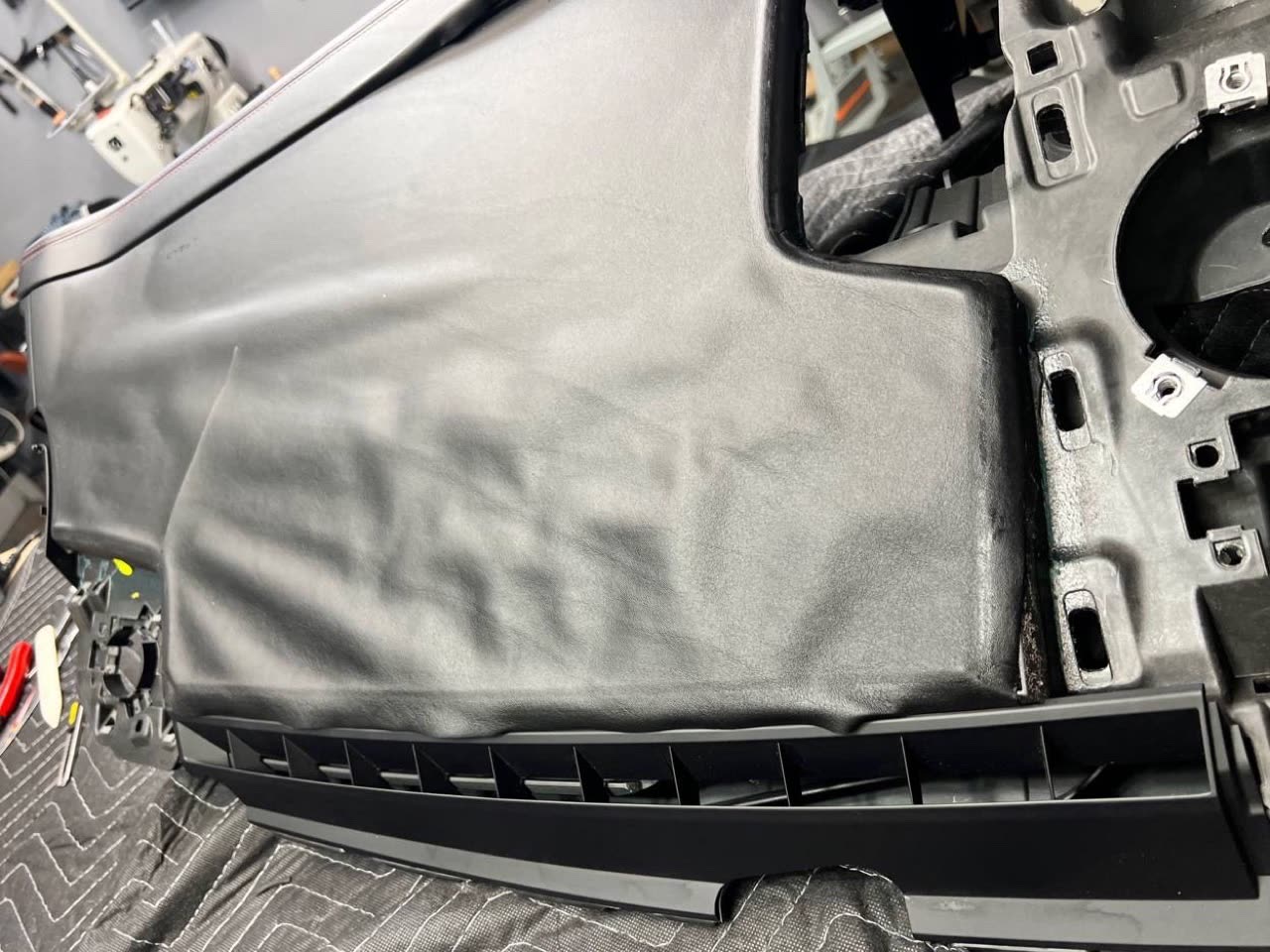
Dashboards are the job I do most often, and when an owner brings one in, the first question is almost always the same: did the glue fail? Partly. Glue is one of three things that give up together, and all three start with heat.
How hot does a dashboard get?
Hotter than most people think. In an Arizona State University study, dashboards in cars parked in the sun averaged 157°F after one hour. Researchers in Florida measured nearly 200°F back in 1988. That's hotter than the coffee in your cup holder.
Miami adds humidity on top. General Motors tests its interior parts under car glass in two places, the Arizona desert and Miami. Miami is there for the humidity, because damp heat speeds up the damage. Your car runs the same test in the parking lot every day, for free.
Why does leather shrink in the heat?
Leather is skin, a dense net of collagen fibers holding water and the oils the tannery adds to keep it soft. A hot dashboard dries the water out every day, and over the years the oils go too. Dry leather is smaller and stiffer. At night it takes some moisture back, but not all of it. Scientists at the U.S. Bureau of Standards showed this in 1933: leather they kept at boiling-water temperature for a day never took back all of its water. A dashboard runs cooler than that, but it gets the heat almost every day for years, and the small losses add up.
The same paper has a line I'd hang on the wall of every trim shop: "If the sample is held in immovable jaws under a proper tension, the pull of the leather itself will in time be sufficient to break it." Your seats bend every time you sit down, so the stress in their leather has somewhere to go. A dashboard NEVER moves. Its leather sits in those immovable jaws on the hottest surface in the car.
Why does dashboard leather lift and pull away from the vents?
A leather dashboard is built in layers: a hard plastic base, a thin soft layer of foam or springy 3D fabric, and the leather on top, cut and sewn to the shape and glued down. At the vents and the defroster grille the leather tucks under the trim and is held by glue and staples.
Think of a fitted sheet that came out of the dryer one size smaller. You can still pull it over the mattress, but it won't lie down in any dip, and it keeps popping off the corners. Shrinking leather on a dashboard does the same two things.
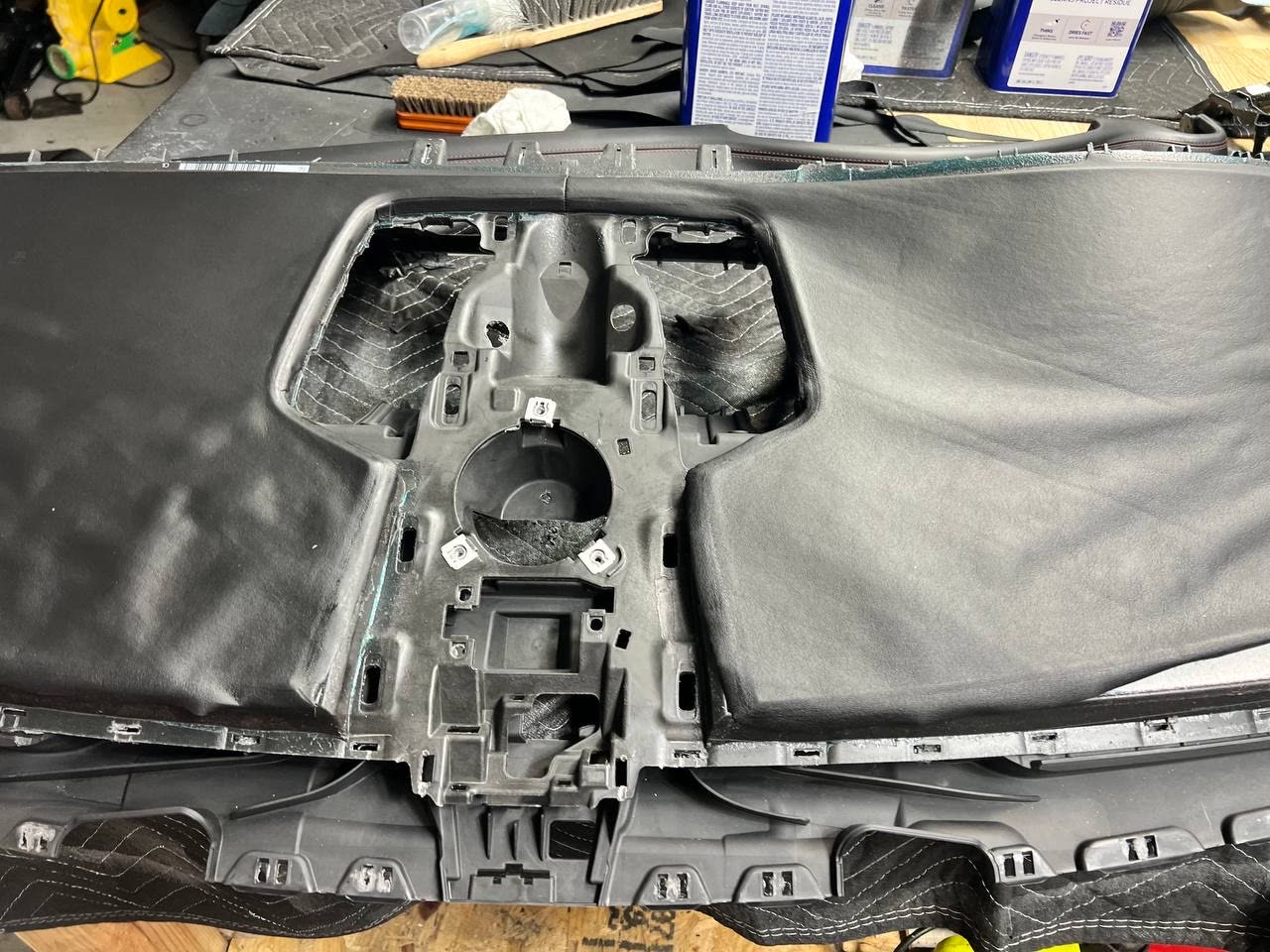
Where the dashboard curves inward or steps down, the tight leather pulls itself straight and comes off the glue. Engineers call this bridging, and a patent on the process warns it can happen "days, weeks, or months later." From the driver's seat it looks like a bubble or a wave.
At the edges the leather slides instead. Next to an air vent or the defroster grille we often find it pulled back an inch and a half, with the padding bare. One photo in Audi's service bulletin is captioned "Massive delamination at the defroster vent."
Is it the glue?
You might say it's just bad glue. You'd be partly right. Glue lives in the same heat. Factory glue that never cured all the way can soften at around 150°F. Some "high-heat" contact cements sold for upholstery are rated to only about that, which is less than a parked dashboard reaches.
Still, glue is one of three. In a 2023 bulletin Audi wrote that the leather detaches "due to process weaknesses and extreme stresses caused by hot and humid climates. The material reaches its physical load limit." The leather, the glue and the way it was laid reach that limit together. That's why the main surfaces of every dashboard we re-trim get a high-temperature adhesive with a hardener.
Leather dashboard shrinking on a brand-new car?
Most owners are surprised to hear that new cars do it too. Audi's bulletin covers R8s up to the 2022 model year and admits its factory fixes are "not 100% effective." In 2025 Lotus redesigned the dashboard top of the Emira over "cracking/shrinkage." On a Porsche owners' forum, the owner of a 2023 Cayenne reported leather problems on both sides of the dash by October 2024. Another owner, with a 2022 Cayenne S in Fort Lauderdale, says theirs started bubbling a little over three years after delivery, even though the car was garaged by day and had a tinted windshield.
The big brands test for exactly this. Porsche has a lab test that measures how hard leather pulls as heat and humidity change, run by a German leather institute to Porsche's spec. BMW has one called, plainly, "Shrinkage Test Instrument Panel." I respect those engineers. Still, Porsche owners have a forum thread titled "Anyone park outside and not have any leather dashboard bubbling issues?", and a 740i owner in Fort Lauderdale wrote that their dash was "peeling at an alarming rate" in the South Florida sun. Florida, it seems, runs a longer test.
Can a shrinking dashboard be fixed without new leather?
Unfortunately, no. Shrunken leather doesn't stretch back. Steaming or heating it to stretch it adds the same heat and moisture that shrank it. One Panamera owner wrote that trying a heat gun at home only made it shrink further. Gluing it back can look fine for a while, but the leather is now smaller than the dashboard under it, so the glue holds it under constant pull. The next hot summer usually tears it off again.
A new dashboard from the dealer costs a lot, can take months to arrive, and then sits in the same sun. The owner of one S560 convertible in Florida says the dealer replaced the dashboard three times under warranty.
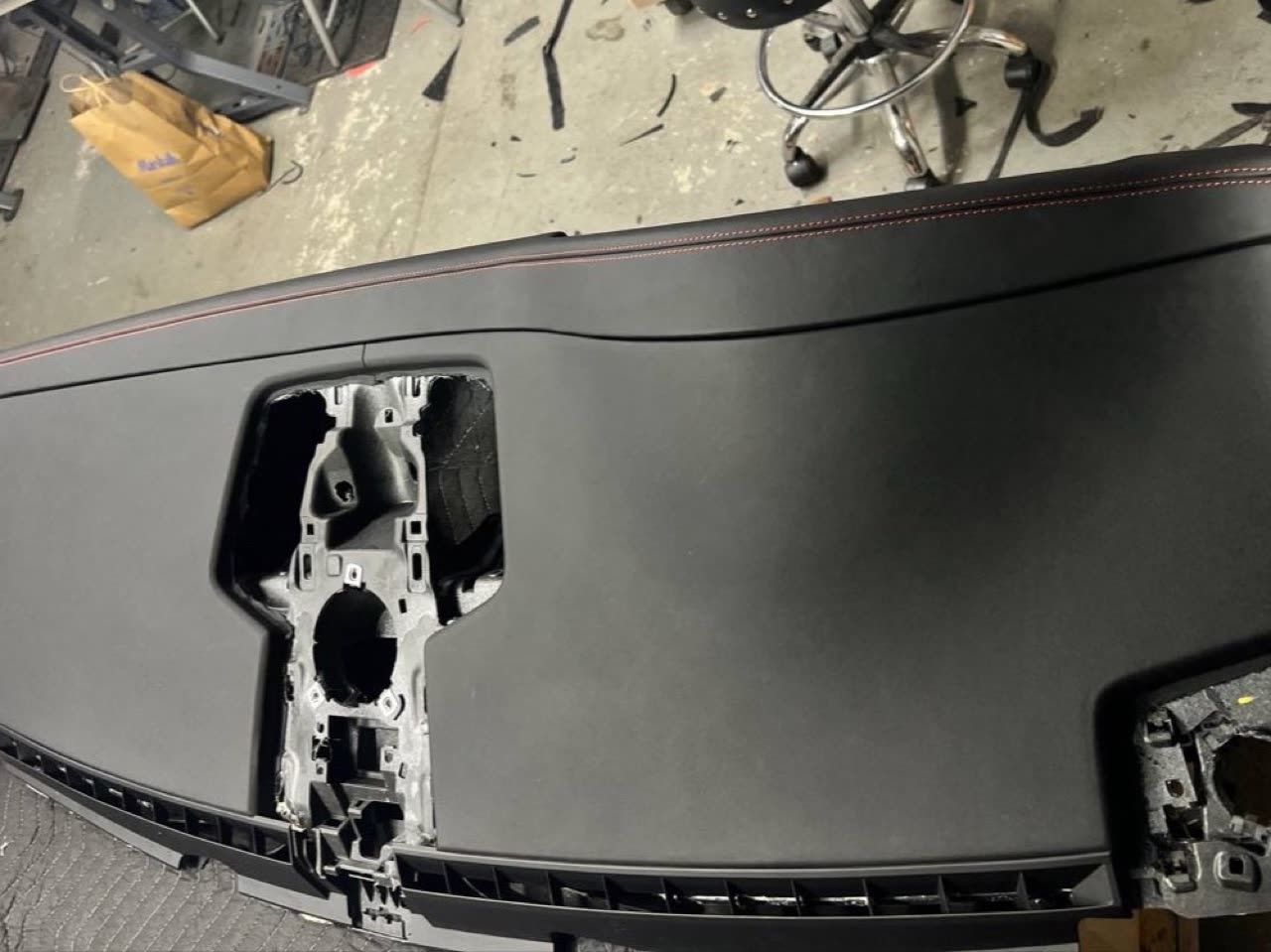
Even Maserati's 2025 service bulletin tells its dealers to bring in a local leather specialist for this job. That's the work we do in our shop every day. We take the dashboard down to the base and replace the padding where it's tired. Then new leather, cut to your dashboard's pattern and matched to your car, goes on with the airbag line cut from the inside the way the factory does it.
How to slow it down
Shade does the most. In the Arizona study, parking in the shade dropped the average dashboard temperature from 157°F to 118°F, and in Florida a plain cardboard sunshade cut it by about 40°F. For cleaning, a gentle foam and a damp cloth are enough. In our shop we use LeTech's leather foam on leather, plastic and Alcantara alike (how we clean). Skip harsh cleaners, because Audi lists them among the causes. More habits are in our guide to protecting a dashboard from the Florida sun.
Let's sum up
Leather on a dashboard shrinks because heat and humidity work on it every day while it's glued down and held at the seams. The curves lift, the edges slide out of the vents, and new cars get it too. Once leather has shrunk, no glue or cream will bring it back. The way back is new leather.
Frequently asked questions
Why is my dashboard leather pulling away from the vents?
Next to a vent or the defroster grille the leather ends and is tucked under the trim, held by glue and staples. As the leather shrinks, that is where it slides back first. In our shop we often see it pulled back an inch and a half, with the padding showing.
Can I glue my dashboard leather back myself?
You can, and it may look fine for a few months. But shrunken leather only reaches when it is stretched, so the glue holds it under constant pull. Some contact cements sold for upholstery are also rated to only about 150°F, less than a parked dashboard reaches. The next hot summer usually tears it off again.
Does it happen in a garage-kept car?
Yes, more slowly. Owners of garage-kept Porsche Cayennes, Audi R8s and Mercedes S-Classes have reported the same lifting. Heat and humidity reach a car in a garage too, and every day parked in the sun adds to it.
Will a new dashboard from the dealer last longer?
It is a new part that lives in the same sun. The owner of one S560 convertible in Florida says the dashboard was replaced three times under warranty. Whatever you choose, a windshield sunshade helps.
Dashboard re-trim in Miami, or ship it from any state
Shrunken dashboards are the job we do most often at BRUTMAN. We re-trim yours in new leather matched to your car, in 2 business days once your leather is in the shop, with a written one-year warranty. Not in Florida? Have the dashboard taken out and ship it to us, always without the airbag. See how we re-trim a dashboard.